A real report, page by page.
Studio 9 is a one-chair barber studio in Stanmore with a strong Instagram following and no Google reviews. With nothing of its own to read, the report reads the ten barbers around it instead.
What went into this one report
Where Studio 9 stands
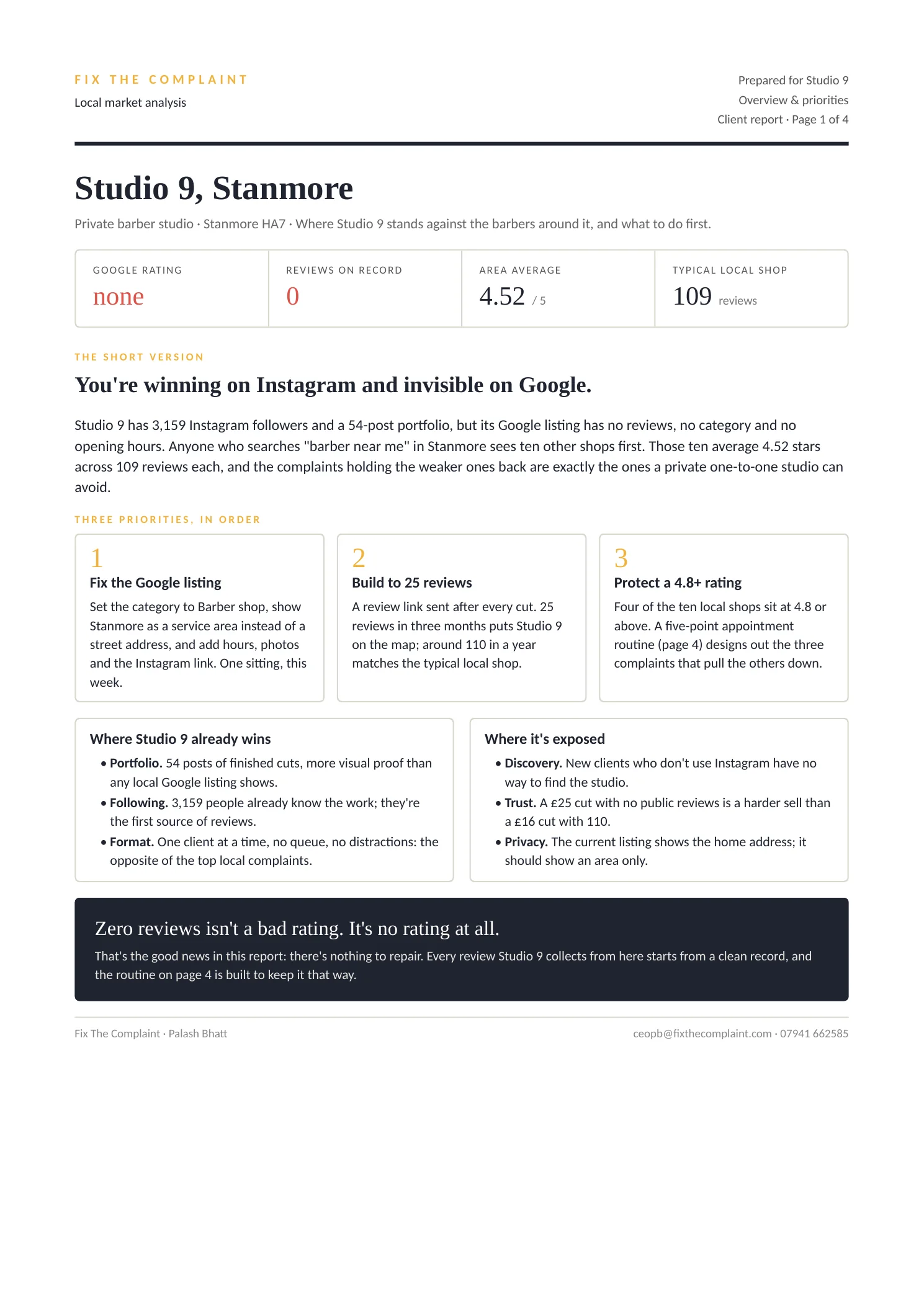
3,159 Instagram followers, but a Google listing with no reviews, no category and no opening hours. The first page sets three priorities, in order.
Zero reviews isn't a bad rating. It's no rating at all, so every review from here starts clean.
Who it competes with
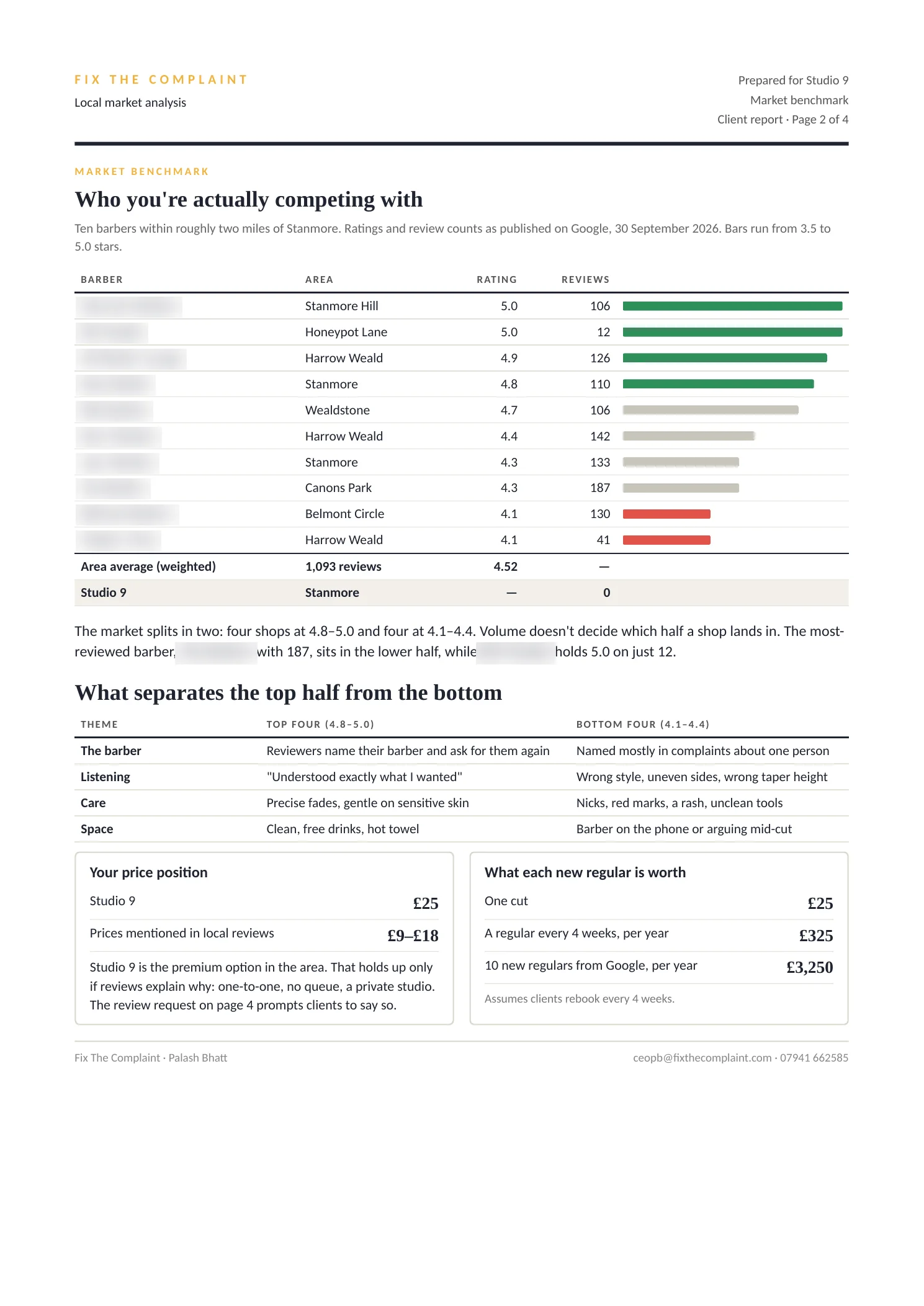
Ten barbers within two miles, as rated on Google. The market splits in two: four shops at 4.8 to 5.0, and four at 4.1 to 4.4.
Review count doesn't decide which half a shop lands in. One shop holds 5.0 on just 12 reviews.
What local customers complain about
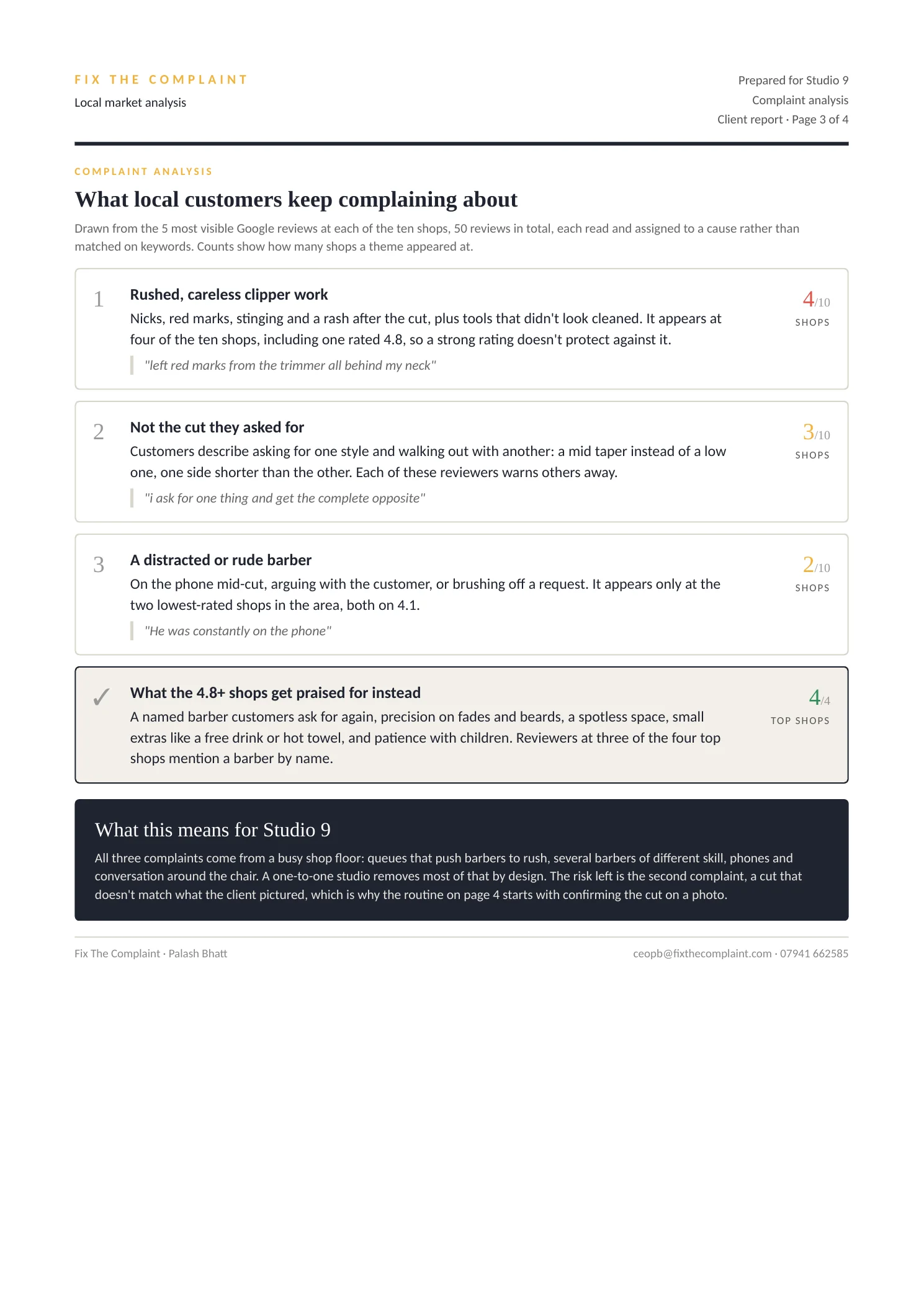
Fifty reviews read and grouped by cause: rushed clipper work at four shops, the wrong cut at three, a distracted barber at two.
All three come from a busy shop floor, which a one-to-one studio avoids by design.
The fix kit
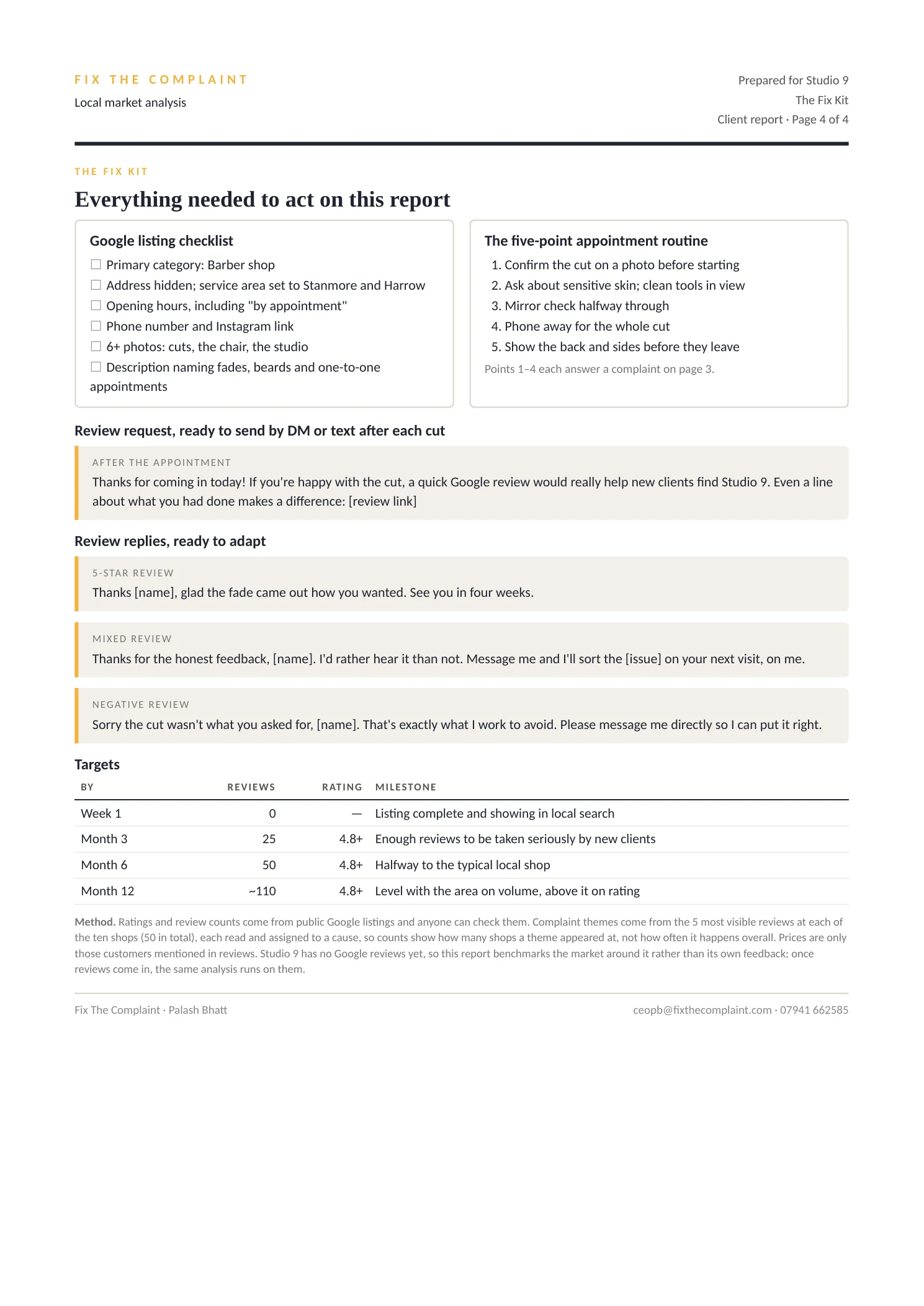
A Google listing checklist, a five-point appointment routine, a review request ready to send, and replies for good, mixed and bad reviews.
Targets: 25 reviews by month three, around 110 by month twelve.
Click a page to read it full size.
Lots of reviews? Here's what that looks like.
A busy 38-cover restaurant, built from common review patterns rather than a real client.
142 reviews across 18 months, grouped by cause rather than wording.
Order accuracy
Wrong dish, missing item or ignored request, mostly on Friday and Saturday evenings.
"they forgot the side completely"
How complaints were handled
Nine of these sit in the same reviews as an order mistake. People are angry about the response, not the mistake.
"no apology, just a shrug"
Wait before ordering
Concentrated between 7:30 and 8:30pm. Almost absent on weekdays.
"20 minutes before anyone came over"
Noise
Steady for 18 months. A feature of the room, not a change in how it's run.
The finding: order accuracy and complaint handling are one problem with a bad ending. Fix the ending and most of these reviews never get written.
Order complaints per 40 reviews, against comparable restaurants within a 15-minute walk.
Is it just bad luck? The chance of a gap this size happening at random is under 5%. It's a real difference, and a specific one, which usually means it's fixable without spending money.
You fill in two figures and every step of the arithmetic is shown.
Halve it if you think that's generous. It's still worth an afternoon of your time.
Ordered by impact against effort. Nothing here needs new equipment or new staff.
Give staff a recovery script
Acknowledge, replace without argument, take something off the bill. Costs the price of a dish and one team briefing.
Read orders back on Friday and Saturday
Accuracy complaints cluster in two services, so target those, not the whole week.
Cover the 7:30 to 8:30 gap
A rota change, not a new hire. Moving one break may be enough.
Noise
Flat for 18 months and expensive to change. Some customers like it.